
The Ultimate Guide to Leak Detection in San Diego: Protecting Your Home from the Silent Threat Under the Slab
San Diego is a city defined by its relationship with water. From the sparkling Pacific to the complex infrastructure required to bring water across the desert, we understand that water is a precious resource. However, when that water escapes its confines within your plumbing, it transforms from a life-giving necessity into a destructive force.
For homeowners from Oceanside to Chula Vista, the phrase “slab leak” or “pinhole leak” is the start of a nightmare. Because of San Diego’s unique environmental conditions—high mineral content, corrosive soils, and aging infrastructure—leak detection in San Diego is not just a plumbing service; it is a critical home maintenance specialty.
Why San Diego is a “Hot Zone” for Household Leaks
If it feels like your neighbors are always getting repiped, you aren’t imagining it. Leak detection in San Diego CA is a massive industry because our region faces a “perfect storm” of plumbing stressors.
The Chemistry of San Diego Water
San Diego’s water is notoriously “hard.” It contains high levels of calcium and magnesium, but more importantly, it often contains chloramines used for disinfection. While safe to drink, these chemicals are highly corrosive to copper piping—the standard material used in most San Diego homes built between 1960 and 2010. Over time, this leads to pitting corrosion, creating “pinhole leaks” that can spray mist inside your walls for months before being noticed.
Expansive Soils and Foundation Stress
Much of San Diego County sits on bentonite clay or “expansive soil.” When it rains, this soil swells; when it dries, it shrinks. This constant movement puts immense physical stress on the copper lines buried beneath your home’s concrete slab. Eventually, the pipe kinks or rubs against a rock, leading to a catastrophic failure.
High Municipal Water Pressure
To get water to homes on our many mesas and hills, the city must maintain high pressure in the main lines. If your home’s Pressure Reducing Valve (PRV) fails, this “hammering” effect can blow out weak joints in your plumbing system.
Understanding the “Slab Leak”: San Diego’s Biggest Threat
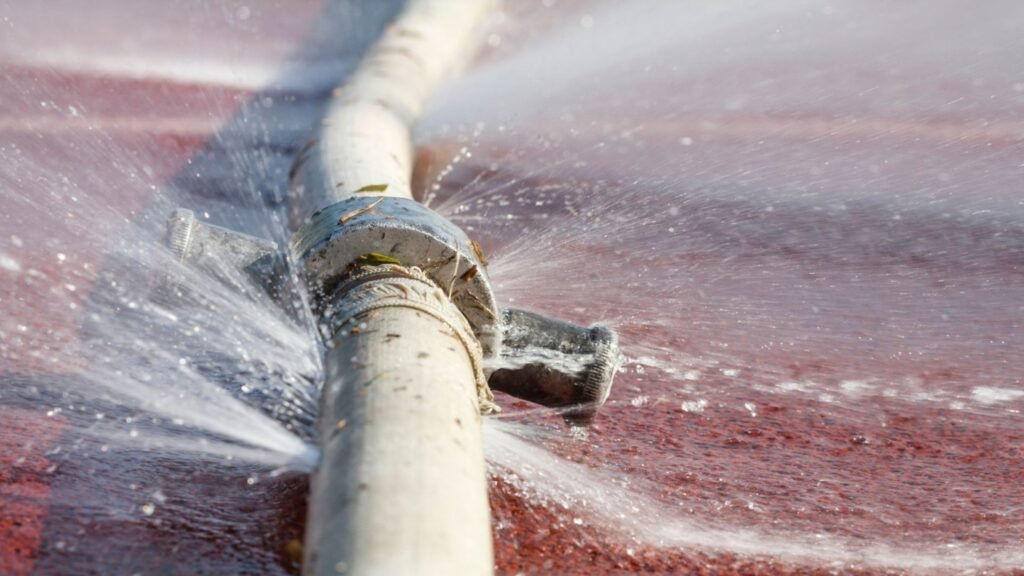
When searching for a leak detection company in San Diego, most callers are dealing with a suspected slab leak.
What exactly is a slab leak?
Most Southern California homes are built on a “slab-on-grade” foundation. This means your water lines are buried in the soil or gravel underneath four to six inches of concrete. When one of these pipes leaks, the water doesn’t just go up; it saturates the ground under your house.
The Dangers of Ignoring a Slab Leak
- Foundation Heave: The water can cause the soil to expand, actually lifting your house and cracking the foundation.
- Sinkholes: In sandy areas like Pacific Beach or Mission Valley, a leak can wash away the soil entirely, creating a void under your floor.
- Mold and Mildew: Capillary action pulls the moisture through the porous concrete and into your carpet or hardwood floors.
Local Leak Detection San Diego County: Service Areas
San Diego County is massive. A leak in a high-rise condo in Little Italy requires a different detection approach than a leak in a sprawling ranch-style home in Escondido.
- Coastal Areas: High salt content in the air can corrode exterior fixtures and tankless water heaters.
- Inland Valleys: Extreme temperature fluctuations cause pipes to expand and contract more rapidly.
Leak Detection Company San Diego: Commercial vs. Residential
Commercial leak detection involves fire suppression systems, large-scale boiler loops, and complex irrigation systems. Residential experts focus more on the domestic water supply and sewer laterals.
The Technology of Modern Leak Detection
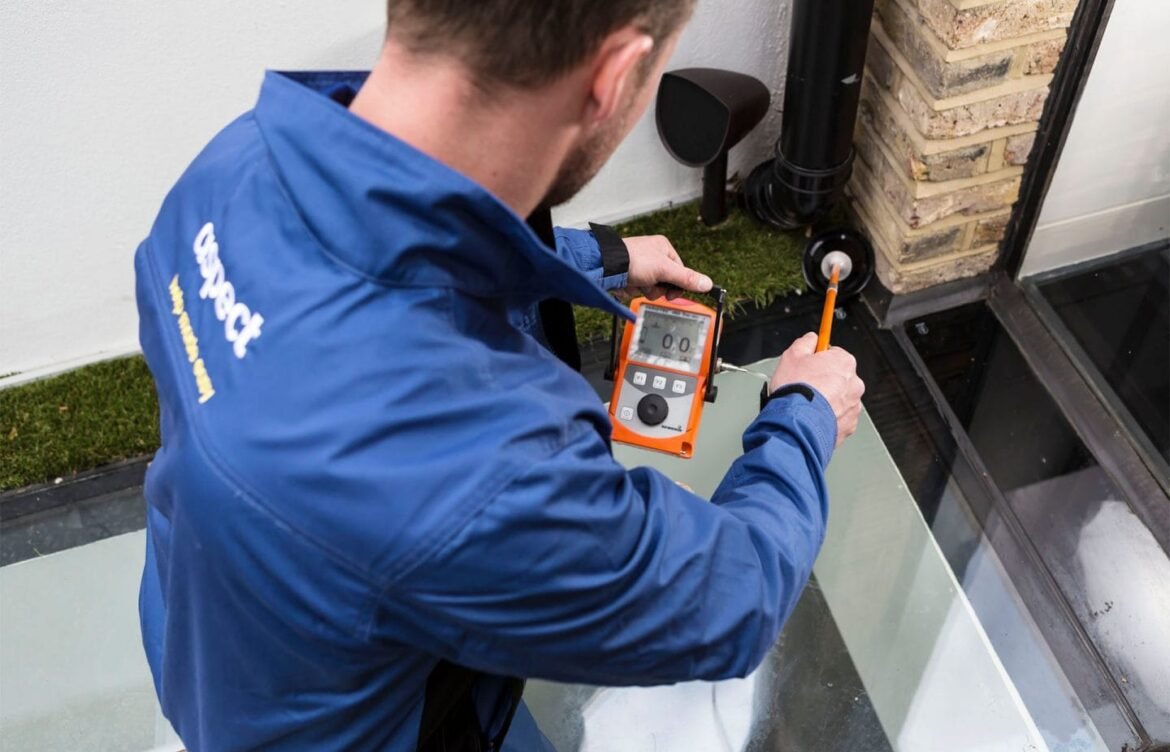
The days of “guess and check” plumbing are over. A professional leak detection company in San Diego uses an arsenal of non-invasive tools.
Acoustic Ultrasonic Sensors
Imagine a doctor’s stethoscope, but amplified 10,000 times. Technicians use “ground microphones” to listen for the specific frequency of escaping water. They can even “charge” the line with air to make the sound louder, allowing them to find a leak through several feet of concrete and dirt.
Thermal Imaging Cameras
Infrared cameras allow us to see through walls—literally. By detecting the temperature difference between dry drywall and damp drywall, or identifying the hot-spot where a hot water line is leaking under a floor, we can find moisture without stripping the wallpaper.
Digital Helium and Tracer Gas
For the most difficult leaks, we drain the water and pump a safe, “lighter-than-air” gas (usually a Nitrogen/Hydrogen mix) into the pipes. We then use a “sniffer” to find where the gas is escaping through the floor. Since gas molecules are smaller than water, this is the most accurate method for tiny “seeper” leaks.
The Financial Reality: Water Bills and San Diego Rates
San Diego has some of the highest water rates in the United States.
Tiered Pricing
The City of San Diego uses a tiered pricing system. Once you pass a certain threshold of “normal” use, the cost per unit of water skyrockets. A hidden leak can push you into the highest tier, resulting in a bill for $800 or $1,000 for a single month.
Leak Adjustments
Many San Diego water districts offer a “Leak Adjustment” credit. If you provide a receipt from a professional leak detection company in San Diego showing that you found and repaired a leak, the city may credit back a portion of the high bill. However, they will not do this if you wait too long to fix the issue.
DIY Detection: What Every San Diego Homeowner Should Know
While you can’t find a slab leak with a flashlight, you can perform a “15-Minute Home Audit” to see if you have a problem.
- Check the Irrigation: In San Diego, 50% of leaks are in the sprinkler system. Check for “spongey” spots in the grass or dying plants near a valve box.
- The Toilet Dye Test: Put a few drops of food coloring in the tank of your toilet. Don’t flush. If color appears in the bowl after 15 minutes, your flapper is leaking. This can waste 200 gallons a day!
- The Water Meter Test:
- Find your meter (usually at the curb).
- Ensure all faucets are off.
- Watch the “low flow” indicator (usually a small red or blue triangle). If it’s moving, you have an active leak.
Sewer and Drain Leak Detection
Not all leaks are in the “clean” water lines. San Diego CA has many older neighborhoods (North Park, South Park, Kensington) with clay sewer pipes.
Tree Root Intrusion
Our beautiful San Diego palms and eucalyptus trees are “water seekers.” Their roots can find a tiny crack in a sewer line and grow inside it, causing backups and underground sewage leaks.
Video Pipe Inspection
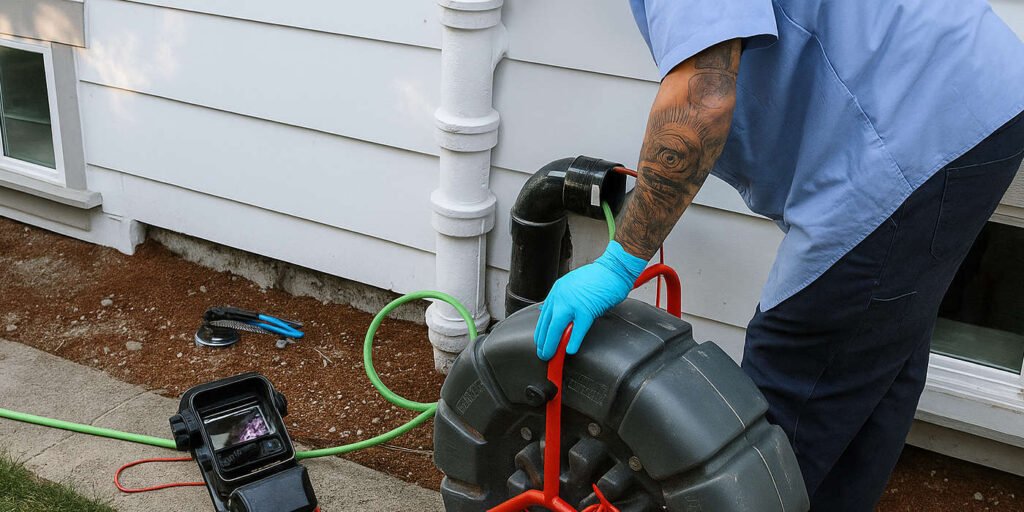
Professional companies use high-definition cameras on fiber-optic cables to “crawl” through your sewer lines. This allows you to see the inside of your pipes on a monitor, identifying cracks, bellies, or root blockages before they cause a backup in your bathtub.
Insurance and Leak Detection: What’s Covered?
A common question when hiring for leak detection San Diego CA is: “Will my insurance pay for this?”
- The Leak Detection: Most homeowners’ insurance policies will pay for the cost of “accessing” the leak (the detection and the demolition of the slab), but they often will not pay for the actual plumbing repair (the $200 pipe fix).
- Resulting Damage: If the leak ruined your hardwood floors or cabinets, insurance typically covers the restoration.
- Negligence: If you ignore a visible leak for months, the insurance company may deny the claim based on “failure to maintain.”
Repair Strategies: After the Leak is Found
Once your local leak detection San Diego County expert finds the hole, you have three main options:
- The “Direct Repair”: Jackhammering the floor and fixing that one spot. (Cheap now, but risky as the rest of the pipe is likely also corroded).
- Rerouting: Abandoning the old pipe under the slab and running a new one through the walls or attic. (Most common in San Diego).
- Epoxy Lining: “Sleeving” the inside of the pipe with a food-grade resin. (Great for sewer lines).